
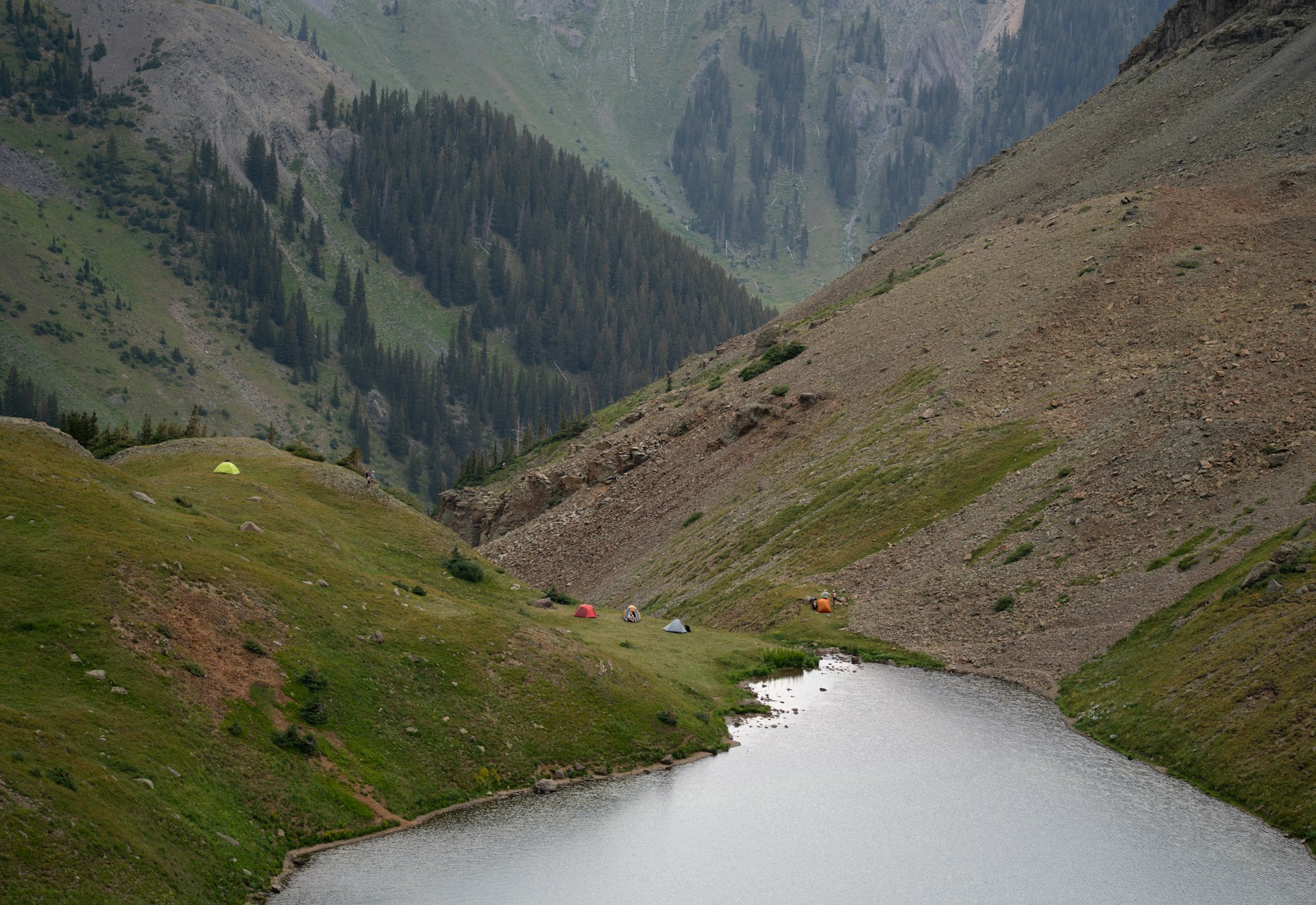
About 28% of the US landmass is public land managed by the federal government, and most of it is open to camping for free. The challenge isn’t that free campsites don’t exist — it’s knowing where to look and how to find them. This guide covers every method that actually works.
Understanding Free Camping on Public Land
Free camping in the US goes by several names depending on the context: dispersed camping, boondocking, primitive camping, and dry camping all refer to roughly the same thing — camping outside of a developed, designated campground, usually with no amenities and no fee.
The two federal agencies that oversee the majority of free camping land in the US are the Bureau of Land Management (BLM) and the US Forest Service (USFS). Understanding what each manages is the starting point for finding free sites.
Bureau of Land Management Land
BLM land is concentrated in 12 western states — Alaska, Arizona, California, Colorado, Idaho, Montana, Nevada, New Mexico, Oregon, Utah, Washington, and Wyoming. If you’re camping in the western US, BLM land is your most reliable source of free sites. Most BLM land allows dispersed camping along existing roads and in established clearings, with a standard 14-day stay limit in any 28-day period.
The rules are simple: camp at least 200 feet from any water source, pack out all trash, and follow any posted restrictions. Some popular BLM areas require a free permit or have specific designated dispersed sites to manage impact — always check the local BLM field office website for the area you’re visiting.
National Forest Land
The US Forest Service manages over 175 national forests and grasslands across almost every state, including the East Coast and Midwest. Dispersed camping is permitted in most national forests outside of designated campgrounds, developed recreation areas, and wilderness areas that require permits. The standard stay limit is 14 days.
National forests are particularly valuable for eastern and midwestern campers who don’t have easy access to BLM land. States like Vermont, New Hampshire, Michigan, and North Carolina all have national forests with free dispersed camping available.
To find dispersed camping rules for a specific national forest, search for the forest by name on the USFS website (fs.usda.gov) and look for the recreation or camping section. Each ranger district sets its own specific rules.
Other Public Lands Worth Knowing
BLM and National Forest land get the most attention, but several other land types offer free camping that many people overlook:
State Forests. Often less crowded than national forests and heavily underutilized. Many allow dispersed camping with rules that vary significantly by state. States like Pennsylvania, Michigan, and Oregon have large state forest systems with free camping. Check the state’s Department of Natural Resources (DNR) website for rules.
Wildlife Management Areas (WMAs). State-managed lands set aside primarily for hunting, but many allow free camping during non-hunting seasons. Often very remote and uncrowded. Rules vary by state and by specific WMA.
Army Corps of Engineers. Manages lakes and reservoirs across the country. Some have free or low-cost primitive camping areas around the shoreline. Less well-known than BLM or USFS but genuinely worth checking for your region.
The Best Tools for Finding Free Sites
Knowing which land types allow free camping is the starting point. Finding specific spots requires the right tools.
FreeCampsites.net
The most straightforward tool for finding free campsites. A map-based search engine with community-submitted sites across the US, including user reviews and photos. The interface is basic but it works well, and because it’s less widely used than some newer apps, it occasionally surfaces less-crowded spots that haven’t been overrun.
Campendium
Similar to FreeCampsites.net but with a cleaner interface and more detailed reviews. Filter by price to show only free sites. Campendium is particularly strong for RV and van campers but works equally well for tent campers. The review quality tends to be high, with useful details about road conditions and cell service.
iOverlander
A crowd-sourced app showing free and paid campsites worldwide. Useful for finding general areas where dispersed camping exists, but popular sites listed here tend to get crowded. Better used as a starting point for identifying an area than for finding a specific private spot.
OnX Offroad or Gaia GPS
These are mapping apps with public land overlays that show exactly where BLM, National Forest, and other public lands begin and end. This is the critical verification step — before driving down a forest road to camp, confirm you’re actually on public land and not private property. Both apps work offline once maps are downloaded, which matters because you’ll often lose cell service before reaching dispersed campsites. OnX Offroad is free to start; Gaia GPS costs around $30 per year.
The USFS Motor Vehicle Use Maps
Free PDF maps published by each National Forest ranger district showing which roads are open to vehicles and where dispersed camping is permitted. Less user-friendly than an app but authoritative — if a road is on the Motor Vehicle Use Map, you’re legal to drive it. Find them through the individual forest pages on fs.usda.gov.
How to Find a Spot Step by Step
The reliable process for finding a free dispersed campsite goes like this:
First, identify the general area where you want to camp and check whether there is BLM, National Forest, or State Forest land nearby using OnX Offroad or Gaia GPS. Second, look up the specific rules for that land management unit — stay limits, fire restrictions, any required permits. Third, use FreeCampsites.net or Campendium to find known sites in that area and read recent reviews. Fourth, download offline maps before you leave because cell service will likely be unavailable. Fifth, when you arrive, confirm you’re on public land before setting up camp and observe any posted signs.
What Free Campsites Don’t Have
Dispersed campsites typically have none of the following: restrooms, running water, trash cans, picnic tables, fire rings, or cell service. This means you need to bring everything — water, a way to dispose of waste, and a means to camp without a fire ring if fire conditions require it.
The 14-day stay limit means you can’t set up a permanent base. After 14 days in one spot, you must move at least 25 miles away (the distance varies by land management area, so check local rules).
Leave No Trace
Free dispersed camping exists because land managers allow it on the assumption that campers will leave no trace. Pack out everything you pack in. Don’t dig trenches around your tent. Camp on durable surfaces like rock, gravel, or dry grass rather than vegetation. Keep your distance from water sources. If enough campers trash these sites, they get closed — and many popular spots already have been.
The Honest Limitations
Free dispersed camping is most accessible in the western US. East of the Mississippi, options exist but are more limited and require more research to find. If you’re camping in New England, the Southeast, or the Midwest, expect to spend more time verifying rules and may need to combine free dispersed sites with occasional paid campgrounds.
A standard passenger car can reach most dispersed sites accessed from paved or well-graded gravel roads. High-clearance or four-wheel drive significantly expands what’s accessible. Some of the best free sites require navigating rough forest roads that aren’t suitable for low-clearance vehicles — know your car’s limits before committing to a road.
This post contains affiliate links. If you buy through our links, we may earn a small commission at no extra cost to you.