
Planning your first camping trip and not sure what to pack? This checklist cuts through the noise. You don’t need a car full of gear to have a great time outdoors — you need the right gear. Here’s everything a beginner actually needs, organized by category, with budget notes throughout.
Before we get into the list: the best money-saving move for first-time campers is to borrow gear before buying anything. Ask friends or family for a tent, sleeping bag, and sleeping pad. Once you know camping is for you, then invest. Until then, there’s no reason to spend money on gear you might use once.
Shelter
Your tent is the most important piece of gear you’ll bring. For beginners doing car camping, ease of setup matters more than weight.
- Tent (sized for your group plus one)
- Tent stakes and poles (usually included)
- Rainfly (check your tent includes one)
- Ground tarp or footprint (protects the tent floor)
- Tent repair tape (for emergencies)
Sleep System
Bad sleep ruins a camping trip faster than anything else. Get this category right and the rest of the trip looks after itself.
- Sleeping bag (rated for the lowest temperature you expect)
- Sleeping pad or air mattress
- Pillow (easy to forget, miserable without)
- Sleeping bag liner (adds warmth cheaply)
- Eye mask and earplugs
Camp Kitchen
You don’t need a gourmet camp kitchen. You need to boil water, cook simple meals, and keep food cold.
Cooking
- Camp stove (single-burner propane is easiest for beginners)
- Propane fuel canisters (bring one more than you think you need)
- Lighter or waterproof matches
- Pot and pan
- Cooking utensils: spatula, spoon, tongs
- Cutting board and knife
- Can opener
- Cast iron skillet (heavy but excellent for car camping)
- Grill grate for cooking over a fire
Eating and Cleanup
- Plates, bowls, and mugs — reusable, not paper
- Cutlery per person
- Cooler (sized for your group and trip length)
- Biodegradable dish soap
- Sponge or scrubber
- Small wash basin or collapsible sink
- Trash bags
- Aluminum foil (surprisingly versatile)
- Camp table if your site won’t have a picnic table
Lighting
- Headlamp — one per person, non-negotiable
- Extra batteries or USB charging cable
- Camp lantern for shared light at the site
- String lights for ambience
Clothing
The core rule with camping clothing is to layer. Nights are always colder than beginners expect, including in summer.
- Moisture-wicking base layer, top and bottom
- Fleece or warm mid-layer
- Waterproof rain jacket
- Hiking boots or trail shoes, broken in before the trip
- Camp sandals or flip flops for around the site
- Warm hat and gloves — even in summer for cold nights
- Wool or synthetic socks, at least two pairs per day
- Sun hat
- Swimsuit if camping near water
Hygiene and Toiletries
- Toilet paper — bring your own, campground supplies run out
- Hand sanitizer
- Biodegradable soap
- Toothbrush and toothpaste
- Quick-dry towel
- Sunscreen (SPF 30 minimum)
- Insect repellent
- Wet wipes
- Trowel for burying waste in backcountry situations
Safety and First Aid
This section is short but not optional. A basic first aid kit and a few safety items belong on every camping trip, regardless of how close to civilization you are.
- First aid kit — pre-packed kits work fine
- Personal medications
- Emergency whistle
- Multi-tool or pocket knife
- Duct tape
- Phone with downloaded offline maps
- Portable power bank
- Emergency mylar blanket — weighs almost nothing
- Bear canister or bear bag where required
Comfort Items
These aren’t essential but they make a real difference, especially for car camping where weight isn’t a constraint.
- Camp chairs, one per person
- Hammock
- Firewood, or check if available at your campground
- Camp axe or hatchet for splitting wood
- Cards or board games
- Book or journal
Quick Reference: The Core List
- Tent, rainfly, stakes
- Ground tarp
- Sleeping bag
- Sleeping pad
- Pillow
- Camp stove and fuel
- Lighter or matches
- Pot and pan
- Plates, bowls, cutlery
- Cooler
- Headlamp and batteries
- Camp lantern
- Rain jacket
- Warm layers
- Hiking boots
- Sunscreen and bug spray
- First aid kit
- Multi-tool
- Biodegradable soap
- Toilet paper and hand sanitizer
- Trash bags
- Power bank
What to Leave at Home
Equally important as knowing what to bring is knowing what not to bring. First-time campers almost always overpack.
- Excessive clothing. Two or three days of clothes is enough for any car camping trip. Everything can be reworn.
- Elaborate cookware. One pot and one pan handles any camp meal you’ll realistically make.
- Scented toiletries. Strong scents attract wildlife. In bear country, unscented products matter.
- Valuables. Leave jewelry, expensive electronics, and anything you’d be upset to lose at home.
One Last Tip
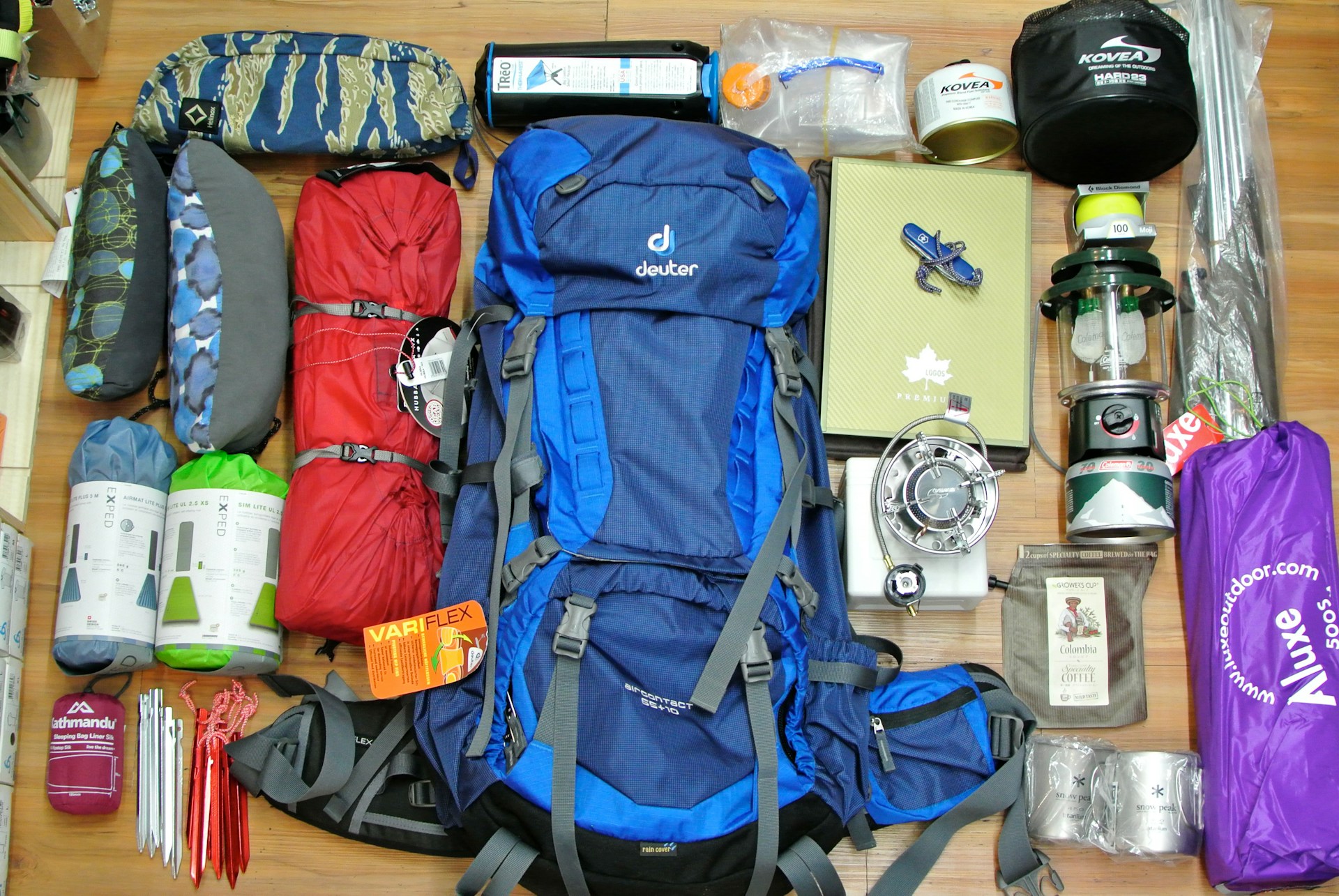
The night before your trip, lay everything out on the floor and check it against this list. Pack heavy items like the cooler and tent at the bottom of your car, lighter items on top. If you camp regularly, keep a dedicated bin stocked with the non-perishable camping essentials so packing for each trip takes minutes rather than hours.
The goal isn’t a perfect setup — it’s getting outside. Even a borrowed tent and a basic sleeping bag beats staying home.
This post contains affiliate links. If you buy through our links, we may earn a small commission at no extra cost to you.